
The Enchanting Tale of Outdoor Water Fountains: A Journey Through Time
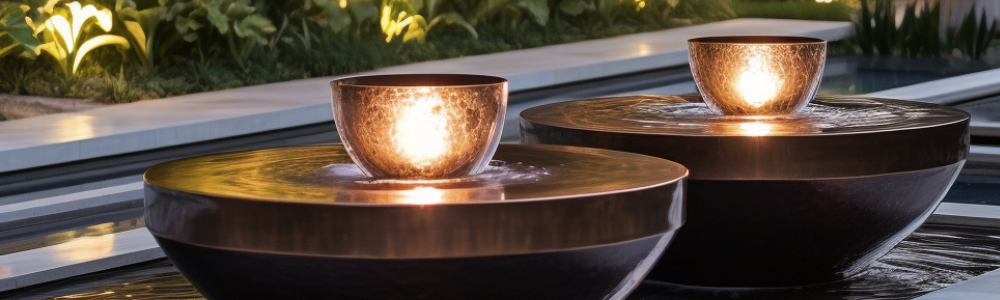
Table of contents
- From the Gardens of Ancient Civilizations
- The Roman Influence
- Renaissance: The Revival of Art and Fountains
- The French Grandeur
- Modern-Day Interpretations
- Therapeutic Influence of Water Fountains: A Blend of History and Healing
- Reflecting on the Timeless Journey of Water Fountains
There's a certain magic that emanates from the gentle cascade of water as it flows through ornate stones, catching the glint of sunlight and casting ephemeral rainbows in its mist. Outdoor water fountains, with their harmonious blend of nature, art, and architecture, are more than mere decorative structures. They are storytellers, narrating tales of ancient civilizations, bygone eras, technological advancements, and humanity's eternal bond with water.
As we stand before a fountain, lost in its mesmerizing dance, we seldom realize the profound historical journey it represents. This journey is filled with tales of grand empires, artistic renaissances, and the ever-evolving relationship between man and nature. Every droplet that springs forth is like a page from history, reminding us of our ancestors who, just like us, stood captivated by the fountain's allure.
The whisper of water, flowing gently or gushing with vigor, speaks of the countless hands that sculpted, the masterful minds that designed, and the societal influences that birthed each unique structure. These fountains, often taken for granted in their silent majesty, have been witnesses to epochal events, secret rendezvous, and public jubilations. Their presence in the squares and gardens of civilizations tells of cities bustling with life, of trade routes bridging cultures, and of the incessant human desire to marry form with function.
From the grand plazas of ancient Rome to the serene courtyards of Far Eastern palaces, fountains have played pivotal roles in societal evolution, reflecting not just artistic preferences but also technological advancements and shifts in societal norms. They have been symbols of power and prosperity, of ingenuity and innovation. Yet, at their core, they represent humanity's age-old fascination with the life-giving essence of water.
Now, as we embark on this exploration, we invite you to time-travel, to immerse yourself in the cascading tales of outdoor water fountains, and to uncover their evolution across eras, civilizations, and continents.
From the Gardens of Ancient Civilizations
When we trace the lineage of water fountains, it becomes evident that their presence was not merely ornamental. They bore significance in rituals, societal structures, and daily life.
Mesopotamia: Water as Divine
In ancient Mesopotamia, around 3000 BCE, gardens were seen as earthly renditions of paradise, and the inclusion of water fountains added to this celestial imagery. The Tigris and Euphrates rivers were central to the flourishing of Mesopotamian civilizations. Consequently, water was deeply revered, and fountains became symbols of divine blessing. The 'Hanging Gardens of Babylon', one of the Seven Wonders of the Ancient World, is believed to have housed a complex aqueduct system, with fountains that brought life to the terraced gardens.
Ancient Egypt: Symbol of Life's Eternality
The ancient Egyptians held water in great reverence. Their civilization blossomed around the Nile, and they associated water with the goddess Isis, who represented motherhood and fertility. Fountains in temple gardens were not just sources of refreshment; they symbolized the eternal cycle of life. The constant flow of water was a reminder of the Nile's annual inundation, which brought fertility to the land.
Persia: The Heavenly Gardens
Ancient Persians mastered the art of creating 'paradises' – enclosed gardens that epitomized beauty and serenity. These gardens, known as 'pairidaeza', were marked by symmetrical designs, often quartered by water channels representing the four rivers of life. Central outdoor water fountains were common, symbolizing the spring of life. Their design was meticulous, intending to evoke a sense of balance between humans and nature.
Ancient Greece and Rome: Societal Markers and Technological Wonders
By the time we move to ancient Greece, fountains had become prominent fixtures in public spaces. They were no longer just divine or symbolic; they became functional, serving as communal water sources. Temples, gymnasiums, and public baths often had elaborate fountains. The city of Athens had numerous public fountains, known as 'Enneakrounos', which were fed by underground clay pipes.
The Romans took this to an entirely new level. With their advanced aqueduct system, they managed to transport water from distant sources into the heart of their cities. Public fountains, often adorned with elaborate sculptures, became societal markers. They were places of gathering, conversation, and often, reflection. The famed 'Trevi Fountain', though a much later construction, echoes the grandeur of ancient Roman fountains.
The Roman Influence
The Romans are often celebrated for their monumental achievements in engineering, architecture, and urban planning. Among their many contributions, the development and widespread use of water fountains stand out, both in their sprawling empire and the civilizations that followed.
Engineering Mastery: The Aqueducts
The Roman Empire was renowned for its advanced infrastructure, and the aqueducts are a prime example of this. These were vast channels – sometimes spanning miles – ingeniously constructed to transport water from distant sources into cities and towns. They relied on a precise gradient to ensure a continuous flow of water, demonstrating the Romans' acute understanding of physics and engineering.
The introduction of the aqueduct system was revolutionary. It meant that fountains could be constructed far from direct water sources, leading to an explosion in the number of fountains throughout the Roman world. Public baths, latrines, private homes, and communal fountains all benefited from this vast network of flowing water.
Centers of Social Life
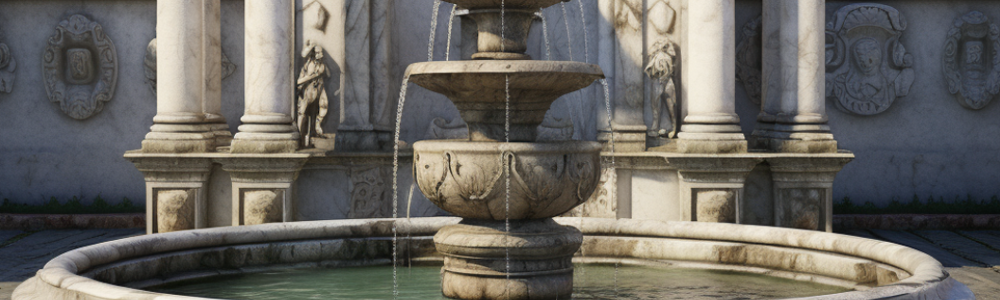
In ancient Rome, fountains were more than just ornate decorations or sources of drinking water. They became integral to the social fabric of the city. Larger decorative fountains, or 'nymphaeums', often became gathering points, buzzing with activity. Citizens would meet here to collect water, discuss the latest news, or simply enjoy the refreshing ambiance. They were, in many ways, the social media hubs of their day.
Artistic Flourish and Political Statements
The design and decoration of Roman fountains were not left to chance. They often bore sculptures and reliefs depicting gods, mythical creatures, and historical events. For the wealthy and influential, a private fountain was a status symbol, and its design could communicate power, taste, and even political allegiances.
Emperors would often commission fountains to commemorate military victories or other significant events. For instance, fountains with a maritime theme, adorned with sculptures of sea nymphs and tritons, celebrated Rome's dominance over the seas.
Legacy Beyond the Empire
As the Roman Empire expanded, so did its architectural and cultural influence. Regions under Roman control, or those that interacted with Rome, began to incorporate Roman-style fountains in their cities. The result? A lasting legacy that saw the Roman approach to fountains spread to various parts of the ancient world, influencing designs and trends for centuries to come.
Renaissance: The Revival of Art and Fountains
The Renaissance, which spanned from the 14th to the 17th century, marked a period of rebirth in art, culture, and intellectual pursuits in Europe. Following the Middle Ages, there was a renewed interest in the classical knowledge and aesthetics of ancient Greece and Rome. This revival profoundly influenced architecture, painting, sculpture, and, notably, the design and significance of fountains.
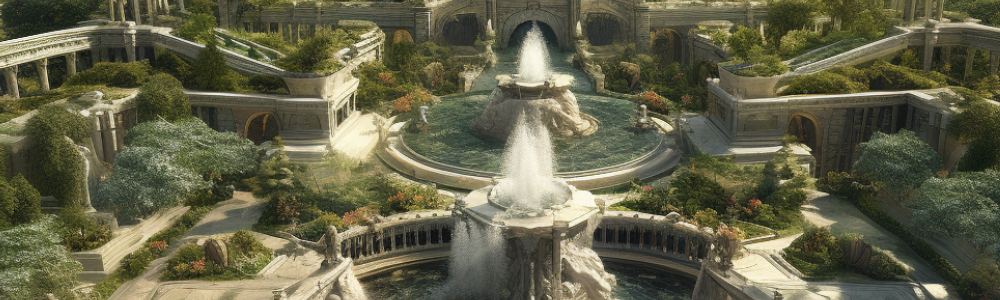
During this period, cities across Italy, the heartland of the Renaissance, saw the construction of grand piazzas, ornate buildings, and magnificent fountains. As the era progressed, fountains evolved from mere functional entities to monumental works of art. They became symbols of a city's wealth, prestige, and enlightened spirit.
Florence, the cradle of the Renaissance, was home to numerous artists and architects who experimented with fountain designs. The city's leaders recognized the power of art and its potential to transform public spaces. Fountains were no longer just about providing water; they became a medium for artists to express their creativity and for cities to showcase their cultural prominence.
In Rome, the papacy played a crucial role in the commissioning of fountains. As the city sought to reclaim its ancient glory, popes and cardinals sponsored the construction of vast aqueducts and spectacular fountains. The Trevi Fountain, perhaps the most famous of them all, is a testament to the era's grandeur. Its intricate sculptures and cascading waters capture the essence of the Renaissance's artistic brilliance.
Moreover, the fountains of the Renaissance were often laden with symbolism. Water, with its life-giving properties, was seen as a metaphor for knowledge and enlightenment, concepts deeply cherished during this period. The dynamic interplay of water with sculptures—be it mythological figures, animals, or allegorical representations—was a visual narrative, telling tales of heroism, love, tragedy, and divinity.
As the Renaissance spirit spread beyond Italy, so did its influence on fountain design. France, Spain, and other European nations began integrating these artistic principles into their own fountain constructions. These water features, with their emphasis on balance, proportion, and intricate detailing, epitomized the Renaissance's contribution to melding functionality with unparalleled beauty.
In essence, the Renaissance's impact on outdoor water fountains was profound, transforming them into monumental statements of a city or patron's cultural and artistic aspirations. Through their splendor, they celebrated human achievement, the beauty of nature, and the continuous cycle of rebirth and renewal.
The French Grandeur
When one thinks of opulence, beauty, and elegance in historical contexts, France, especially during its golden ages, often stands prominently in such musings. The realms of architecture, art, and landscaping underwent significant evolution in France, and fountains, with their intrinsic allure, were no exception.
The late Renaissance period in France saw a departure from Italian influences and the birth of a distinctly French approach to art and design. This era ushered in the age of grand châteaux with their sprawling gardens, and within these verdant expanses, water fountains found their own space of majesty.
Versailles stands as the epitome of this grandeur. Commissioned by Louis XIV, the Palace of Versailles is not just an architectural marvel but a testament to France's ambitions and the Sun King's vision of a centralized power. The Gardens of Versailles, with their meticulous geometries and expansive vistas, house numerous fountains, each telling a tale of mythology, power, and artistry. These aren't just fountains; they are theatrical displays of water, where sculptures dance amidst jets and cascades, embodying tales from ancient mythologies.
But it wasn’t just Versailles. Across France, from the Loire Valley to the outskirts of Provence, châteaux and public spaces embraced the charm of quality ornate fountains. They became sites of gatherings, places where courtiers, poets, and the public would converge, drawn by the mesmerizing interplay of art and water. In these spaces, fountains were more than decorative elements; they were symbols of French finesse and cultural sophistication.
French fountain designs were characterized by their scale, symmetry, and the intricacies of their sculptures. They were reflections of an age where art was a means of showcasing not just beauty but authority and nationhood. The nymphs, gods, and celestial figures that adorned these fountains were chosen not just for their aesthetic appeal but for the stories they represented—tales of conquests, passions, and the divine.
Furthermore, as French influence spread across Europe, so did its distinctive approach to fountains. They became a means for cities and nobility alike to align themselves with the epitome of elegance that France had come to represent in the world of art and architecture.
In essence, France's period of grandeur elevated the fountain from a mere architectural feature to an emblem of artistic and political might, an entity that blended the beauty of nature with the ambitions of a nation.
Modern-Day Interpretations
In today's urbanized and digitized age, where concrete jungles dominate and screen-time eclipses garden-time, the significance and role of outdoor water fountains have taken on new dimensions. No longer confined to grand palaces or sprawling estates, fountains have evolved to be versatile, adaptive, and reflective of the modern ethos.
The 20th and 21st centuries have witnessed a resurgence of interest in outdoor spaces as sanctuaries of serenity amid the hustle and bustle of urban life. Architects and urban planners have reincorporated water features as central elements in public parks, commercial complexes, and even residential areas. The soothing sound of cascading water serves as a natural antidote to the cacophony of city life.
But modern fountains are not just about creating peaceful ambiances. They have become canvases for artistic expressions and innovative designs. Some fountains today are interactive, inviting onlookers to engage rather than just observe. These dynamic installations might respond to movements, light up in myriad colors, or even synchronize with music, turning water displays into harmonious ballets of fluid choreography.
Moreover, sustainability has influenced the designs of contemporary fountains. With increasing awareness about water conservation, many modern fountains are constructed to recirculate water efficiently. They serve as reminders of the delicate balance between nature's generosity and the responsibilities of human stewardship.
Then there are the artistic reinterpretations. Modern artists and designers, while acknowledging the rich legacy of fountains, often infuse them with abstract designs, minimalistic structures, or even digital integrations. These fountains challenge traditional aesthetics, prompting viewers to question and contemplate the very essence of art and nature.
However, even as they don modern avatars, these fountains continue to serve as gathering spots. Just as our ancestors might have congregated around a fountain in a French château's garden, today's city-dwellers often find themselves pausing by a fountain in a city plaza, drawn by its allure. They serve as anchors in our fast-paced world, reminding us of the timeless beauty of water and its power to enchant, soothe, and inspire.
Therapeutic Influence of Water Fountains: A Blend of History and Healing
Throughout their history, water fountains have not only been celebrated for their artistic and aesthetic appeal but also for their calming and therapeutic influence on the human psyche. This intersection of history and well-being presents an intriguing dimension of our relationship with these water features.
The Sound of Water: A Natural Soother
The sound of flowing water, gentle and rhythmic, has an innate ability to instill a sense of tranquility. Historically, many cultures believed that water held purifying properties, both physically and spiritually. This sentiment can be traced back to ancient civilizations that regarded water as a sacred element. In many cultures, flowing water was seen as a medium to cleanse the soul and ward off negative energies.
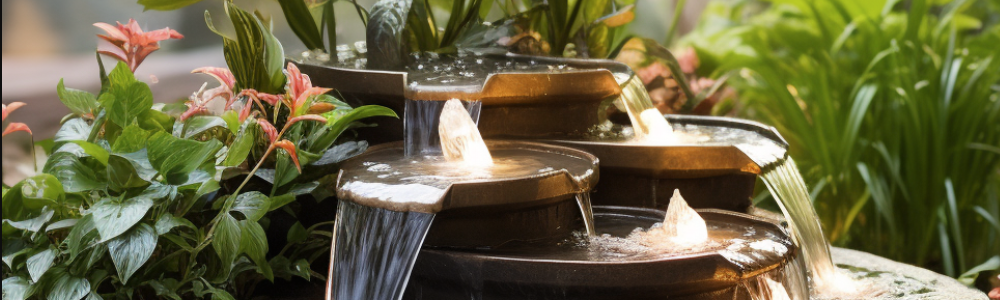
Fast forward to today, and science offers a rationale behind this ancient belief. The sound of flowing water can stimulate the release of neurochemicals in the brain, reducing stress and inducing a state of relaxation. It's not just about the visual allure of a fountain; the auditory experience plays a crucial role in its therapeutic influence.
Historic Retreats: Fountains as Spaces of Reflection
Many historically significant fountains were constructed in places meant for contemplation and reflection. The gardens of monasteries, temples, and palaces often housed fountains that provided a serene backdrop for meditation, prayer, or simply a respite from daily life. The union of architectural genius and the natural beauty of water created spaces where one could introspect and find inner peace.
The Modern Relevance: Urban Oasis
In today's bustling urban landscapes, the therapeutic value of outdoor water fountains is being rediscovered. City planners and architects increasingly incorporate water features in public spaces, recognizing their potential to offer a sanctuary from the relentless pace of modern life. Amidst the concrete jungles, these fountains become pockets of serenity, where city dwellers can momentarily disconnect, find calm, and rejuvenate.
Water Fountains and Holistic Well-being
Beyond the immediate sensory experience, water fountains contribute to holistic well-being. They humidify the air, making it refreshing in dry climates. Moreover, the negative ions produced by splashing water can enhance mood and increase levels of alertness. There's also an undeniable romanticism associated with fountains—a connection to a time when life moved at a slower pace, and the beauty in simple pleasures was cherished.
While the historical and artistic aspects of water fountains often take center stage, their therapeutic influence is an equally compelling facet of their legacy. As we continue to navigate the complexities of the modern world, perhaps there's wisdom in turning to these age-old creations. They remind us of the healing power of nature, the importance of moments of stillness, and the profound impact of beauty on our well-being.
Reflecting on the Timeless Journey of Water Fountains
Outdoor water fountains have borne silent witness to the ceaseless march of time, standing as testaments to human ingenuity, artistry, and our intrinsic connection with nature. They have gracefully graced the pages of our shared history, from the modest stone basins of ancient civilizations to the grandiose masterpieces of the Renaissance and the innovative installations of today.
The true magic of these fountains lies not just in their physical beauty or the calming sound of flowing water but in their ability to resonate deeply within our collective psyche. Fountains are, in many ways, a reflection of the societies that birthed them. They have been tools of political power, expressions of boundless creativity, symbols of societies' values, and, above all, a nexus where human life and nature's bounty converge.
In a rapidly changing world, where technological advancements often threaten to detach us from our roots, these fountains serve as grounding anchors. They remind us of the timeless joys of simple pleasures—of a moment's pause, of the shimmering dance of sunlight on water, of the gentle touch of a cool breeze on a hot day.
Moreover, as we ponder their journey, we come to realize that while fountains have been shaped by history, they too have played a role in shaping it. They have witnessed declarations of love, inspired poets and artists, and have been the backdrop for countless pivotal moments in the lives of both the ordinary and the illustrious.
As we look to the future, it is heartening to think that outdoor water fountains will continue to evolve, yet their essence will remain unchanged. They will always be sources of inspiration, places of respite, and symbols of humanity's enduring love affair with nature. As we build the next chapter in their storied history, let us cherish and preserve these wondrous creations, ensuring they continue to touch souls for millennia to come.